Signs of Hidden Mold at Home
Far more mold gets found by nose than by eye. Houston Mold Removal Experts runs through the clues that point to growth behind a wall, under a floor or above a ceiling in a Houston home, and the ones that mislead people.
- Upfront Quotes
- Inspection & Remediation
- Residential & Commercial
By the Houston Mold Removal Experts team · Updated September 2026
A Smell With an Address
Hidden growth usually announces itself weeks before it appears. The smell is earthy and faintly sweet, somewhere between wet cardboard and an old crawl space, and the useful thing about it is not that you can smell it but that you can locate it. A house that smells vaguely stale all over in August is a humidity problem. A smell you can walk toward, that gets stronger in one closet or one corner of a bedroom, is something growing.
Notice when it is worst. If it sharpens the moment the air conditioning kicks on, the source is probably in the attic or in the duct work, because the system is dragging air across the affected material and delivering it to you. If it is worst on a still, muggy evening with everything shut, the source is more likely in the room itself, in a wall cavity or under the flooring.
What the Surfaces Are Telling You
Paint is a decent witness. Bubbling, blistering or a fine crazing across one patch means moisture is pushing through the drywall from behind. A wall that reads wavy or dimpled where it should be flat has absorbed water and swollen. A faint horizontal band a few inches above the floor is a tide line, and it tells you water once stood there even if the room has been repainted twice since.
Press gently along the baseboard with your thumb. Drywall that has been soaked feels soft and gives slightly; dry board is firm. Baseboards that have cupped, lifted at the edges or pulled away from the wall are a strong hint, as is trim where the paint flakes only along the bottom inch. On flooring, look for swollen laminate joints, vinyl edges that have curled, or a strip of wood floor that has cupped into a shallow trough.
Where People Forget to Look
The inside of a vanity, the cabinet under the kitchen sink and the floor behind a toilet account for an enormous share of what gets found in houses. All three hide a slow drip, all three are out of daily sight, and all three sit on particleboard that swells and holds water for weeks. Open the doors, put a torch in there and look at the back corners and the cabinet base rather than the front edge.
Window sills are another: condensation runs down the glass in a humid month and collects in the corners of the frame. So is the attic hatch. A quick look up with a flashlight, without climbing in, can show staining on the roof sheathing or insulation that has gone dark and matted in one area. If that is what you find, attic mold remediation explains what usually causes it.
Clues That Mislead
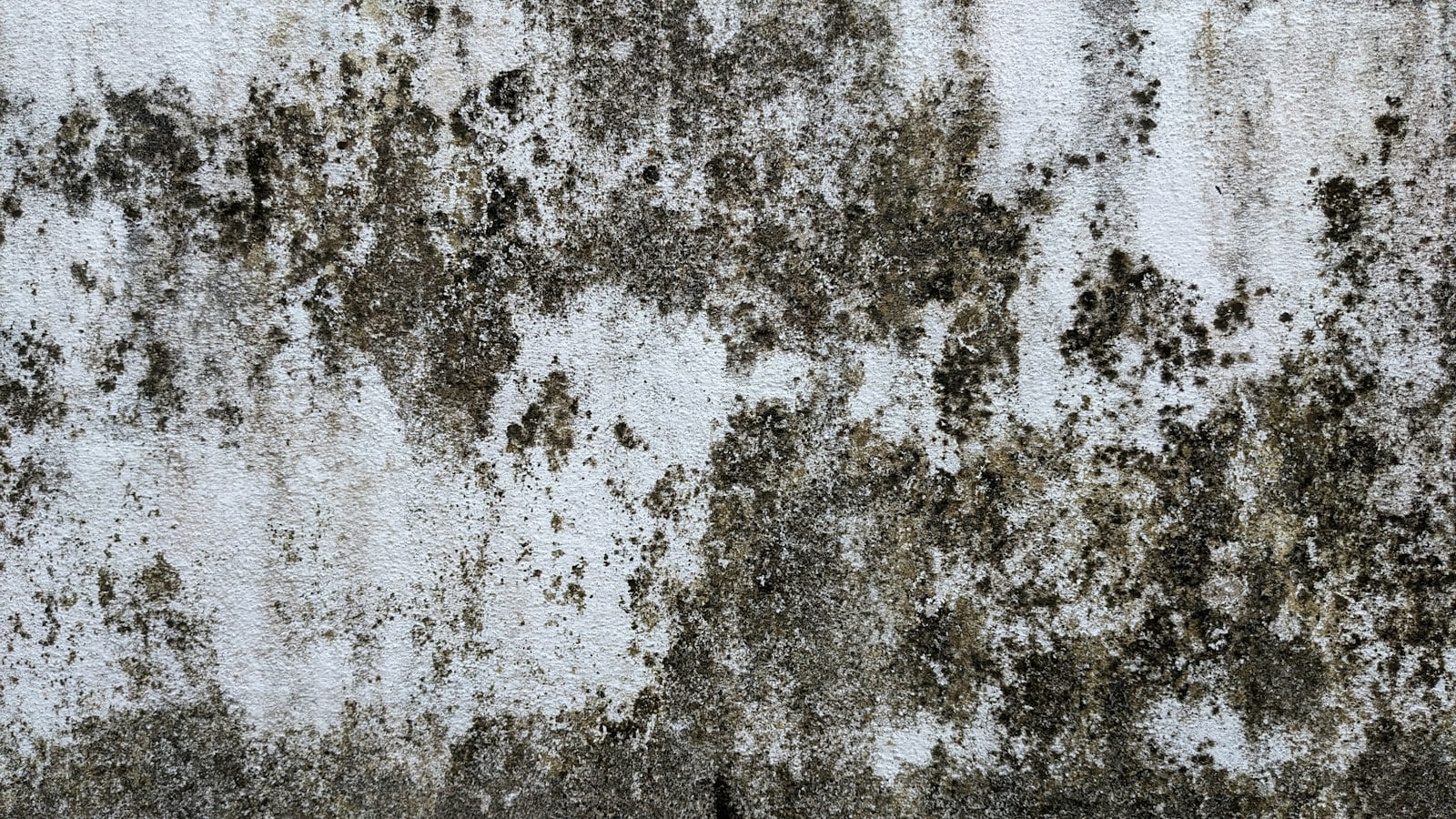
Not every dark mark is mold. Soot from candles builds up around vents and on walls, dust settles along air paths at the edges of ceilings, and old water staining can sit there for years after the material dried out and stopped growing anything. Mold is not reliably black either. Growth on drywall paper can be white, gray, pink, olive or dusty brown, and early growth often looks like a light speckling rather than a solid patch.
The signal that actually matters is moisture, not color. If a surface reads wet and something is growing on it, the problem is live. If it is dry and unchanged for a year, it is probably the record of an old one. Telling those apart by eye is genuinely hard, which is why moisture readings are the backbone of any mold inspection.
What Not to Do While You Are Looking
Do not cut a hole in the wall to have a look. Opening a cavity without containment releases whatever is in there into a house that is otherwise sealed up, and it can turn a one-room problem into a whole-floor one. Do not scrub it with bleach either: that lightens the surface, leaves the growth inside the material and destroys the visual evidence of how far it spread.
What does help: photograph everything, write down when the smell is strongest, and keep the door to that room shut. If water is still running, shut it off at the fixture or the meter, provided you can reach it safely.
Why Houston Houses Hide It So Well
Houston is humid for most of the year, flat enough that rain leaves slowly, and built almost entirely on slabs with the air handler in the attic. There is no basement here for damp to announce itself in, so water spreads sideways along the floor instead of downward. Add attic duct work sweating through a five-month summer and you get the two classic hiding places: a band along the bottom of the drywall, and the underside of the roof deck. Older neighborhoods add aging showers and roofs to the mix, which is why the pattern repeats so consistently in the 1950s housing around Bellaire.
Arrange an Inspection
If the smell has a location and you cannot find the source, that is the point to have someone take readings rather than keep guessing. Houston Mold Removal Experts can inspect the property, map the moisture and tell you whether you are looking at a clean-up or a removal job. Read removal versus remediation first so the quote makes sense when it arrives, see how the cleanup runs, or request an inspection and describe what you have noticed.